


How to Stop Foreclosure
If you are trying to stop foreclosure, the most important step is to act quickly and understand which options still fit your timeline. Some homeowners can keep the home through reinstatement, repayment, forbearance, or a loan modification. Others may need to sell, complete a short sale, request a deed in lieu of foreclosure, or speak with an attorney about legal options if a trustee sale date is approaching.
At San Diego Short Sale Experts, we help California homeowners understand foreclosure alternatives, communicate with lenders, evaluate short sale options, and make informed decisions before a foreclosure sale takes place.
Quick Answer: How can I stop foreclosure?
You may be able to stop foreclosure by bringing the loan current, reaching an agreement with your lender, applying for a loan modification, selling the home, completing a short sale, requesting a deed in lieu of foreclosure, or speaking with an attorney about bankruptcy or other legal options. The best option depends on how far behind you are, whether a Notice of Default or Notice of Trustee Sale has been recorded, whether you want to keep the property, and whether there is enough equity to sell.
Need Help Stopping Foreclosure?
If you are behind on your mortgage, have received foreclosure notices, or have a trustee sale date scheduled, contact us today. We can review your situation, explain your options, and help determine whether a short sale or another foreclosure alternative may be available.
There is no cost or obligation to speak with us.
What to Do First If You Are Facing Foreclosure
If you need foreclosure help, start by finding out exactly where you are in the process. Your available options may be very different depending on whether you have only missed payments, received a Notice of Default, received a Notice of Trustee Sale, or are only days away from a scheduled foreclosure auction.
- Open every letter from your lender or trustee. Look for the words Notice of Default, Notice of Trustee Sale, trustee sale date, reinstatement amount, or loss mitigation.
- Write down the sale date, if one has been scheduled. A short timeline requires a faster plan.
- Call your mortgage servicer and ask about available loss mitigation options. Ask about repayment plans, forbearance, loan modification, short sale, and deed in lieu options.
- Gather your financial documents. Lenders often request income documentation, bank statements, tax returns, a hardship explanation, and a monthly budget.
- Speak with the right professional for your situation. A HUD-approved housing counselor, experienced short sale specialist, real estate professional, tax advisor, or attorney may be appropriate depending on your goals and timeline.
If you are trying to keep the home, your first conversations should usually be with your lender or servicer and, when appropriate, a HUD-approved housing counselor. If keeping the home is no longer realistic, you should quickly evaluate whether a traditional sale or short sale can help you avoid a completed foreclosure.
Can You Stop Foreclosure Immediately?
Sometimes foreclosure can be stopped quickly, but it depends on the stage of the foreclosure process and the option being used. Paying the past-due amount, reaching a written agreement with the lender, getting a foreclosure postponement, or filing a legal action may stop or delay a sale in some situations. However, not every option is available at every stage.
If a foreclosure sale date is coming up soon, time matters. A loan modification review, short sale, or deed in lieu may still be possible, but these options usually require lender review and documentation. If the sale date is only days away, you should also speak with a qualified foreclosure or bankruptcy attorney immediately so you understand your legal options.
San Diego Short Sale Experts is not a law firm and does not provide legal advice. Our role is to help homeowners evaluate real estate and short sale options, communicate with the lender when authorized, and determine whether selling or short selling the property may help avoid foreclosure.
California Foreclosure Timeline: Why Timing Matters
In California, most residential foreclosures are nonjudicial, which means they usually move through a Notice of Default, Notice of Trustee Sale, and trustee auction timeline. Understanding this timeline can help you decide how urgent your situation is.
| Stage | What It Means | What to Do |
|---|---|---|
| Missed Payments | You are behind, but formal foreclosure may not have started yet. | Contact your servicer, request available assistance options, and compare whether keeping or selling the home is realistic. |
| Notice of Default | The formal foreclosure process has started and the default is now public record. | Act quickly. Evaluate reinstatement, loan modification, repayment, sale, or short sale options before the timeline gets tighter. |
| Notice of Trustee Sale | A foreclosure auction date has been scheduled. | Confirm the sale date, request postponement options if applicable, and speak with a short sale specialist or attorney immediately. |
| Trustee Sale Date | The property may be sold at auction if the foreclosure is not stopped, postponed, or resolved. | Emergency options may be limited. You may need legal advice right away in addition to reviewing any remaining real estate options. |
For a deeper explanation of the California process, read our guide to the California foreclosure timeline.
Best Options to Stop or Avoid Foreclosure
There is no single best way to stop foreclosure for every homeowner. The right solution depends on whether your hardship is temporary or permanent, whether you want to keep the home, how much equity you have, and how close the foreclosure sale date is.
1. Reinstate the Loan
Reinstatement means bringing the loan current by paying the past-due amount, fees, and allowable costs. This may be the cleanest way to stop foreclosure if you have access to the funds and can afford the mortgage going forward.
This option usually makes the most sense when the hardship was temporary and you now have the ability to resume regular payments. If you cannot afford the ongoing payment, reinstatement may only delay the problem.
2. Request a Repayment Plan
A repayment plan may allow you to catch up over time while continuing to make your regular monthly payment. This can be helpful when the missed payments are manageable and your income has recovered.
Before agreeing to a repayment plan, make sure the new monthly amount is realistic. A repayment plan that is too high can fail quickly and put you back into foreclosure.
3. Ask About Forbearance
Forbearance may temporarily pause or reduce payments, but it does not erase the amount owed. The missed or reduced payments usually must be repaid later through a lump sum, repayment plan, deferral, loan modification, or another arrangement approved by the servicer.
Forbearance may help if your hardship is temporary, such as job loss, medical expenses, disaster damage, or a short-term income disruption. It may not solve the problem if the payment is no longer affordable long-term.
4. Apply for a Loan Modification
A loan modification changes the terms of the mortgage to help make the loan more affordable or bring the account current. Depending on the loan, investor, and servicer guidelines, a modification may involve adding missed payments to the balance, extending the loan term, adjusting the interest rate, or using another workout structure.
A loan modification is generally worth exploring if you want to keep the home and have enough stable income to support a modified payment.
5. Sell the Home Before Foreclosure
If you have enough equity, selling the home may allow you to pay off the mortgage, avoid foreclosure, and preserve more control over the outcome. This option can be especially important if the hardship is permanent and keeping the home is not realistic.
The sooner you start, the better. Waiting until the foreclosure sale date is close can reduce your ability to market the property properly, negotiate with buyers, and close before the auction.
6. Complete a Short Sale
A short sale may help you avoid foreclosure if you need to sell but the home is worth less than the total amount owed. In a short sale, the lender reviews a buyer’s offer and decides whether to accept less than the full mortgage balance.
A short sale is not automatic. The lender will usually review the homeowner’s hardship, financial documents, property value, buyer offer, closing costs, junior liens, and foreclosure timeline before approving or denying the request.
Learn more about the short sale process and how a short sale compares with foreclosure.
7. Request a Deed in Lieu of Foreclosure
A deed in lieu of foreclosure allows you to voluntarily transfer the property to the lender instead of going through a completed foreclosure. This may be an option when selling is not realistic, but it usually requires lender approval.
A deed in lieu may not be available if there are other liens, judgments, HOA issues, title problems, or if the lender prefers a short sale. Read more about deed in lieu of foreclosure.
8. Speak With an Attorney About Bankruptcy or Legal Options
If a foreclosure sale date is very close, you should speak with a qualified attorney immediately. Bankruptcy or court action may stop or delay foreclosure in certain situations, but these are legal decisions with serious financial and credit consequences.
San Diego Short Sale Experts can help with real estate and short sale options, but we do not provide legal, tax, or bankruptcy advice.
Foreclosure Options Decision Guide
Use this table as a starting point to compare common foreclosure alternatives. The best choice depends on your lender, loan type, foreclosure stage, income, equity, and goals.
| Option | Best For | Can It Help Stop Foreclosure? | Important Considerations |
|---|---|---|---|
| Reinstatement | Homeowners who can pay the past-due amount and continue regular payments. | Yes, if completed before the deadline. | Requires enough funds to cure the default. |
| Repayment Plan | Temporary hardship with enough income to catch up over time. | Potentially, if approved by the servicer. | Monthly payment may increase during the repayment period. |
| Forbearance | Short-term hardship or temporary loss of income. | Potentially, if approved before the foreclosure continues. | Missed payments still need to be resolved later. |
| Loan Modification | Homeowners who want to keep the home and can afford a modified payment. | Potentially, if the review or approval is accepted by the lender. | Requires documentation and servicer approval. |
| Traditional Sale | Homeowners with enough equity to pay off the loan and costs of sale. | Yes, if the sale closes before foreclosure. | Requires enough time to market and close the property. |
| Short Sale | Homeowners who need to sell but owe more than the home is worth. | Potentially, if the lender reviews and approves the short sale before the auction. | Requires lender approval, hardship documentation, and a qualified buyer. |
| Deed in Lieu | Homeowners who cannot keep or sell the home and want to avoid a completed foreclosure. | Potentially, if the lender accepts it before the sale. | May not work if there are junior liens or title issues. |
| Legal Options | Homeowners with an imminent sale date, legal defenses, or bankruptcy questions. | Possibly, depending on the legal strategy. | Speak with a qualified attorney for legal advice. |
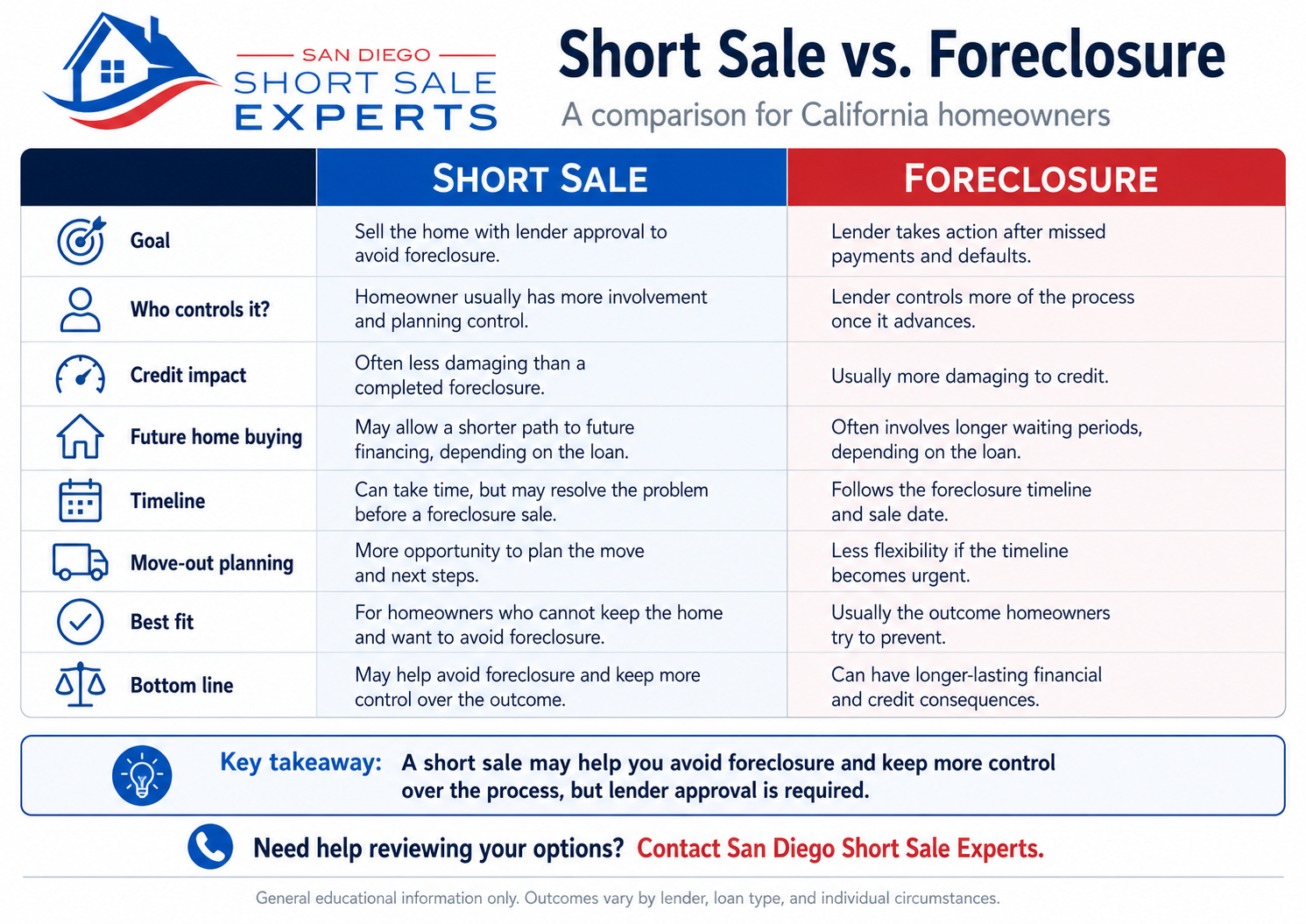
How to Get Your House Out of Foreclosure
To get your house out of foreclosure, you must resolve the default, reach an agreement with the lender, sell the home, or use an approved legal option before the foreclosure sale is completed. Ignoring the problem gives the lender more control and usually reduces your options.
Common ways to get a house out of foreclosure include:
- Paying the full past-due amount and approved costs
- Getting approved for a repayment plan
- Completing a loan modification
- Selling the property before the auction
- Completing a short sale if the home is underwater
- Requesting a deed in lieu of foreclosure
- Speaking with an attorney about bankruptcy or court options
If you are unsure which option fits your situation, contact us before the timeline gets tighter. We can help you evaluate whether a sale or short sale is realistic and what information may be needed to start the process.
When a Short Sale May Be the Right Foreclosure Alternative
A short sale may be a good option when keeping the home is no longer realistic, and the property is worth less than the total debt owed. This is common when missed payments, late fees, second mortgages, HOA balances, property condition, or declining value make a traditional sale difficult.
A short sale may make sense if:
- You owe more than the home is worth.
- You have a real financial hardship.
- You cannot afford the current or modified mortgage payment.
- You want to avoid a completed foreclosure.
- You received a Notice of Default or Notice of Trustee Sale.
- You need help communicating with the lender and managing short sale documentation.
Short sales are detailed transactions. The lender may review your hardship, income, assets, property value, purchase offer, buyer qualifications, closing costs, junior liens, HOA issues, and foreclosure timeline. Working with a team that understands short sales can help prevent avoidable delays.
Considering a Short Sale to Avoid Foreclosure?
If you owe more than your home is worth or cannot afford the mortgage long-term, a short sale may help you avoid foreclosure and move forward with more control over the process. We can review your loan, hardship, equity position, and foreclosure timeline.
There is no cost or obligation to speak with us.
San Diego and California Foreclosure Help
California homeowners should understand both lender options and California foreclosure timing. If your property is in San Diego County or anywhere in California, the sooner you evaluate your options, the more control you may have.
San Diego Short Sale Experts helps homeowners throughout California with foreclosure alternatives, including short sales, lender communication, hardship documentation, property valuation, buyer review, and short sale negotiation support.
Helpful related guides:
- What Is Foreclosure?
- Can I Stop the Foreclosure Process?
- Stop Foreclosure Without Bankruptcy
- Stop Foreclosure Last Minute
- Alternatives to Foreclosure
- What Is a Short Sale?
- Short Sale Relocation Assistance
Watch Out for Foreclosure Rescue Scams
Be careful with anyone who guarantees they can stop foreclosure, asks for upfront fees, tells you to stop talking to your lender, or asks you to sign over the deed to your home. Distressed homeowners are often targeted after foreclosure notices become public record.
Before signing any agreement, make sure you understand who you are working with, what they are licensed to do, what fees may apply, and whether their advice is legal, real estate, tax, or mortgage-related. You can also contact a HUD-approved housing counselor for free or low-cost help.
Expert Review
Expert Review
This page was reviewed by Glen Henderson, California real estate broker and short sale specialist, DRE #01384181. San Diego Short Sale Experts helps California homeowners evaluate short sale and foreclosure alternatives.
Frequently Asked Questions About Stopping Foreclosure
Can I stop foreclosure in California?
Yes, foreclosure may be stopped or avoided in California if you resolve the default, reach an agreement with your lender, sell the property, complete a short sale, complete a deed in lieu, or use a valid legal option before the foreclosure sale is completed. The available options depend on your timeline and lender approval.
What is the fastest way to stop foreclosure?
The fastest non-legal way is usually to reinstate the loan by paying the past-due amount and approved fees. If that is not possible and the sale date is close, speak with your lender immediately and contact a qualified attorney to understand legal options. If you need to sell, a traditional sale or short sale may help if there is enough time before the auction.
How do I get my house out of foreclosure?
You can get your house out of foreclosure by curing the default, getting approved for a repayment plan or loan modification, selling the home, completing a short sale, requesting a deed in lieu, or using an available legal option. The right choice depends on whether you want to keep the home and whether the payment is affordable going forward.
Can I stop foreclosure without bankruptcy?
Yes. Possible non-bankruptcy options include reinstatement, repayment plan, forbearance, loan modification, traditional sale, short sale, or deed in lieu of foreclosure. Bankruptcy may be an option in some situations, but it should be discussed with a qualified attorney.
Can a short sale stop foreclosure?
A short sale may help avoid foreclosure if the lender approves the sale and the transaction closes before the foreclosure auction. Timing is very important. If a trustee sale date is already scheduled, the short sale file must be handled quickly and correctly.
Can I sell my house if it is already in foreclosure?
Yes, you may be able to sell your house while it is in foreclosure, as long as the sale closes before the trustee sale or the lender postpones the foreclosure to allow the transaction to close. If the home is worth less than what is owed, lender approval will usually be required through a short sale.
What happens after a Notice of Default in California?
After a Notice of Default is recorded, the formal foreclosure process has started. This is the time to act quickly, review your lender options, gather financial documents, evaluate whether you can keep the home, and consider selling or short-selling the property if keeping it is not realistic.
What should I do if I receive a Notice of Trustee Sale?
A Notice of Trustee Sale means a foreclosure auction date has been scheduled. Confirm the sale date immediately, contact your lender or servicer, and speak with the appropriate professionals right away. If you are considering a short sale, sale, or legal option, timing is critical.
Should I pay someone up front to stop foreclosure?
Be very careful. Many foreclosure rescue scams ask for upfront fees, guarantee results, or tell homeowners to stop communicating with their lender. Before paying anyone, verify licensing, understand the service being offered, and consider contacting a HUD-approved housing counselor.
Do I need a foreclosure attorney?
You may need an attorney if a sale date is imminent, you have legal defenses, you are considering bankruptcy, you received court papers, or you are unsure about your legal rights. San Diego Short Sale Experts can help with real estate and short sale options, but we do not provide legal advice.
Sources
- California Courts Self-Help Guide: Your Rights in a Nonjudicial Foreclosure
- U.S. Department of Housing and Urban Development: Avoiding Foreclosure
- HUD: Contact Your Lender to Avoid Foreclosure
- Consumer Financial Protection Bureau: If I Can’t Pay My Mortgage Loan, What Are My Options?
- Consumer Financial Protection Bureau: What Is Mortgage Forbearance?
- California DFPI: Mortgage Modification and Foreclosure Scams Alert
Find Out If You Can Stop or Avoid Foreclosure
If you are behind on your mortgage or facing a foreclosure sale date, do not wait. We can help you compare your options, determine whether a short sale may be possible, and explain what steps may need to happen next.
There is no cost or obligation to speak with us.